Belden and OptiCool partner to deliver modular, integrated cooling systems designed for uncertain workloads, enabling scalable and water-free cooling at the rack level.
Much of the conversation around AI infrastructure has focused on chips, power availability, and new data centre construction. Those are real constraints, but they’re not the only factors shaping how quickly new capacity comes online.
With the integration of Belden racks and cabinets with OptiCool rear-door heat exchangers, enterprises and colocation operators can bring advanced cooling straight to the rack to support AI workloads.
OptiCool Technologies announced a strategic solutions referral partnership with CoreSite, an American Tower company empowering critical business and AI workloads that impact everyday life through interconnected data center solutions.
Search "AI infrastructure," and you'll find plenty of headlines about billion-dollar campuses, massive GPU clusters, and record power commitments. Those projects are real, but they don't reflect the decisions most organizations are making.
Artificial intelligence is driving one of the fastest infrastructure expansions the data center industry has ever seen. New facilities are being built, existing campuses are expanding, and enterprises are racing to deploy compute capacity to support AI workloads.
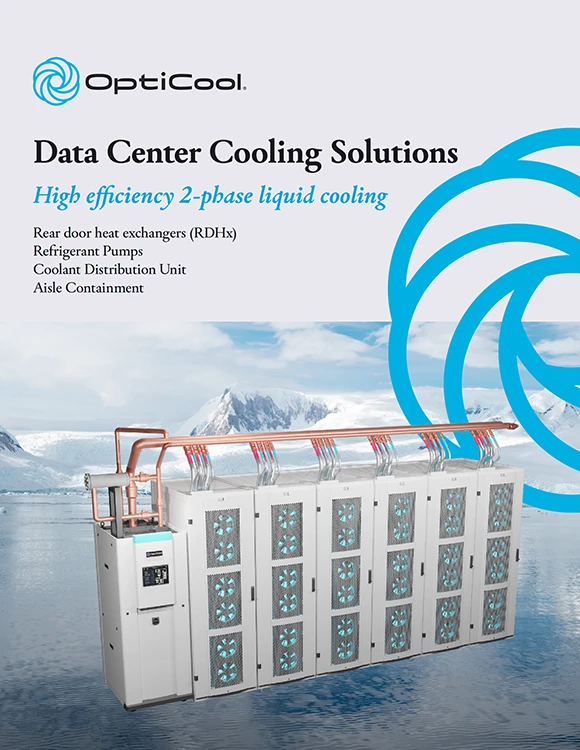
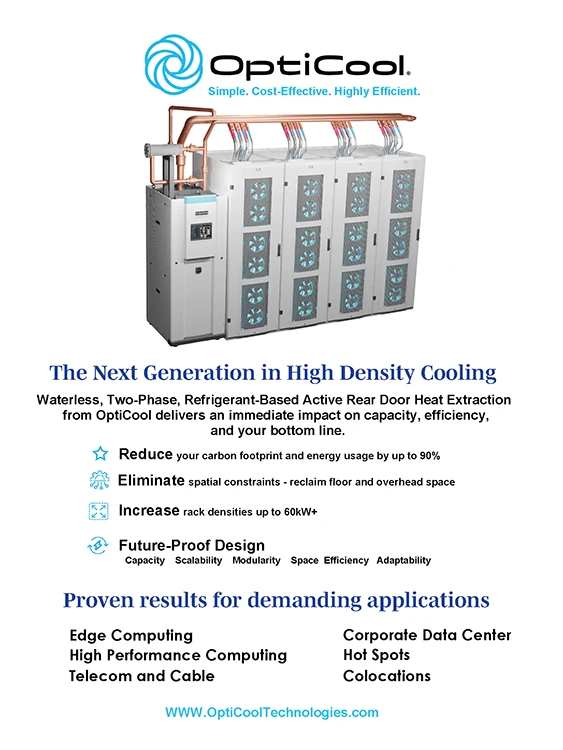
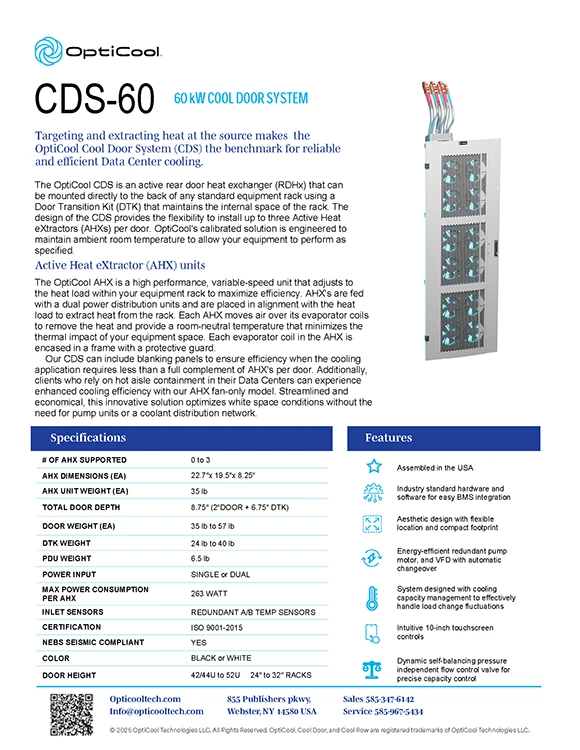
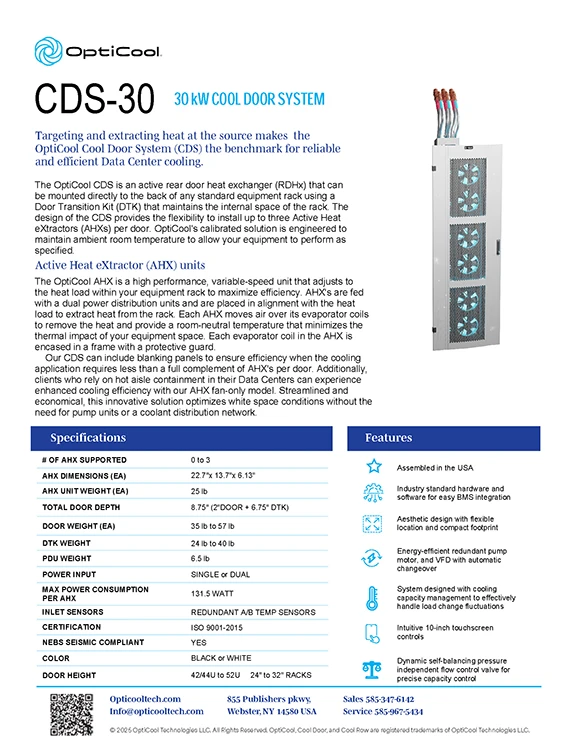
As the heat density of racks in high density data centers continues to rise rapidly, Rear-Door Heat Exchanger (RDHx) cooling systems have emerged as a highly effective alternative to traditional Computer Room Air Conditioning (CRAC) systems.
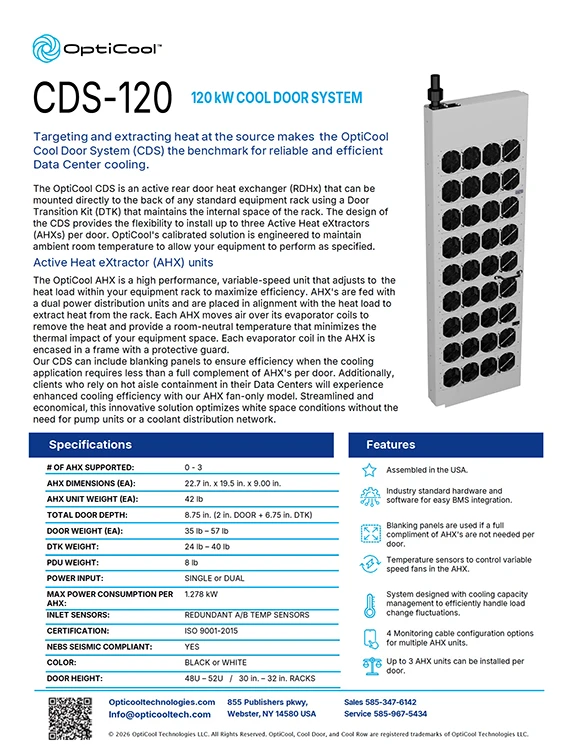
In March 2026, a major aerospace company contacted data center cooling systems provider OptiCool requesting a factory witness test and product evaluation of OptiCool’s new 120 kW rear-door heat exchanger (RDHx). With power levels at the rack pushing 80 kW, the company needed to increase cooling capacity without a major overhaul of its cooling system and the resulting service disruptions.
A Tier 1 US operator decided to expand an existing data center facility due to strong market demand. Not only was additional rack capacity needed, but also the ability to support higher density racks running high-powered workloads. In less than 2 years, the operator saw average heat densities increase 5X from 5-10 kW per rack to 30-50 kW at this facility. Rapid increases in rack density had turned cooling into a binding constraint on sellable capacity.
Security Service Federal Credit Union—which operates 72 branches in Texas, Colorado and Utah—wanted to future-proof its new campus by designing data centers with scalability and energy efficiency in mind. OptiCool’s cooling solution proved highly flexible and redundant for the company’s data center buildout, reducing operational expenses, equipping the facilities for future growth, and allowing the company to recoup costs through energy rebates.
Telecommunications service provider FairPoint Communications of Manchester, New Hampshire, faced unique equipment cooling challenges in building out a new data center facility in an existing building. OptiCool's innovative cooling solutions proved to be low-maintenance, highly adaptable part of the operator’s buildout, providing a modular, plug-and-play approach to the process of adding racks and rooms without disrupting other customers’ equipment.
Victory Technology Center of Buffalo, NY was initially designed as a dedicated data center to support Catholic Health, Western New York’s second largest multi-hospital healthcare system. The design firm MDC Solutions was brought on to retrofit a recently closed hospital into a data center to meet the healthcare system’s rising technology demands.
MITRE was the first company in New England and one of the first enterprises in the U.S. to implement an innovative refrigerant-based cooling solution to support its computing facility in Bedford, Massachusetts. After four years, MITRE’s High-Performance Compute Center is a dramatic example of how progressive thinking and solid system analysis can deliver effective solutions to a complex problem.